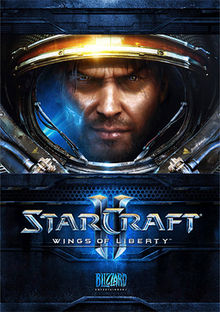
Starcraft II (SC2) changed my life. It helped me make friends, forced me to become more disciplined and patient, and taught me the value of sustained hard work. I fell in love with this game. More importantly, it was one of the first things I stayed interested in and dedicated myself to for an extended period of time.
Although some may slam video games as leading to unproductive people, I argue that like any media it has the potential to connect or isolate. Video games effects depend on how they are used. At least in my case, SC2 positively impacted my life and taught me some valuable life lessons along the way.
Some of you may be reading this and wondering “what is Starcraft II?” Well, for those uninitiated, here is a quick primer on the video game that made my junior year of high school bearable.
Starwhat?

To quickly summarize, Starcraft II is an RTS (Real Time Strategy) game. The aim of the game is to build your base while trying to destroy your opponents. Although simple sounding, it is anything but.
Throughout the game, you have to constantly make decisions on whether to build more bases for more resources or to build more units. Further still, you have to decide which units to build based on how long the game has been going on and what you think your opponent is doing. Oh, and did I forget to mention all these decisions had to be made in real time?
If you wanted to get good at the game like I did at the time, then you spent many hours perfecting the perfect opening (like in chess) and learning counter-play. This exact need led me to make friends through the game.
Lesson 1: Making Friends
This game took a ton of practice before you became anywhere halfway decent. One reason for this is just when you thought you understood how your opponent would play, you would run into something you never saw before and have to figure out how to counter it.
Because of this need for constant iteration, people often sought practice partners to make the monotony of practice more fun. Also, although there was AI, at the low levels it was totally predictable and at the highest settings, it was too fast for new players to do anything against.
This led me to seek out and find a few online friends at a similar ranking as me (more on this later) to practice with. It was nice because we got better at the game together while enjoying laughs along the way. It made the experience more enjoyable and let me feel a human connection, which was largely missing from my life at that time.
Despite feeling mostly isolated, I still did have one or two friends I could play the game with. Granted, none of them got into it nearly as much as I did, which caused minor friction later, but it was still a nice way to connect with people IRL (in real life.)
Lesson 2: Patience and Discipline

Many days I felt like this robot, putting in the passion and work even before the results were there
Because of how the rankings in the game worked, and the value of compounding experience, you had to play every day in order to advance.
Some days this was easy. I would log in, go on a winning streak, and proceed to have a great hour or so of play time. Other days, it felt like chewing on glass. I had a bad day at school, lost the first game, and tilted, which led me to lose all my other games and slide in the rankings.
Whenever I would want to throw in the towel, I would remember the advice of Day[9], a major broadcaster of SC2 when I played, and sit down for one last game. Even if that game was a loss, I felt better because I put in the work and knew I could always gain ground again the next day.
At first, I didn’t feel like I was improving. I was proven wrong within a month when I advanced out of bronze (the lowest rank) and into silver (the next rank.) Considering I had only put in about 30 hours into the game at this point where many people put in 100+, I felt this was good progress.
To this day, I credit my ability to sit and grind through tasks, even if they are unpleasant, to the practice I gained while trying to master Starcraft II.
Lesson 3: The Value of Hard Work

After about three months of play, I finally reached my personal goal, to reach top gold or low platinum. I cannot explain my excitement at seeing the small, shimmering emblem following a hard-fought victory.
Shortly after this point final exams rolled around and I had to dedicate more of my time preparing for those before I went to college, but the glow of reaching my goal followed me.
For the first time in a long time during my junior year of high school, I felt proud of myself and hopeful for the future. Some may claim this is an extreme reaction to a digital medium, but I would challenge their assumption. People understand and accept when others are moved to tears by an amazing musical performance. Video games are another art form, able to invoke deep emotion in the player(s) at their peak.
Lesson 4: Even Good Things End
Unfortunately, as the year drew to close and final exams crept closer I wasn’t able to keep up with the game. I was okay with this though because I got what I needed out of it. Even today I still have a bittersweet fondness of this game.
Although it reminds me of a fairly dark period in my life, it simultaneously reminds me of the power of self-belief. I bought this game to let off steam and seek a challenge I was unable to find in my academics, but I got more than I bargained for.
In this game, I found community through those I played with and the streamers I compulsively followed. I found other nerds like me, which made me feel much less alone. I also found out that I truly could be good at things other than school if I was willing to put in the time and effort.
Although this game has now been largely forgotten by the esports and gaming community as a whole, it will always hold a special place in my heart and helped form my beliefs which carried me to success in university.
 Apprentice Adult