“What the hell am I doing?” as I saw the “Welcome to Massachusetts” sign, this thought raced through my mind. Holding back the occasional tear of anxiety I kept driving on.
Eventually, I reached my destination, my new home in Rhode Island. I hoped my roommates would be nice and chill, but I had no idea what I was about to walk into.
Thankfully, my gut happened to be right settling on this particular house. Immediately, Joe, one of my roommates, was there to greet me. He helped me settle in and even gave me a bit of food since I hadn’t been able to shop yet.
In the days to come, I would then meet my other two housemates, Sean and Seth, who were also warm and inviting. In this regard, I was incredibly fortunate and thankful.
Staring into the Void
Don’t look too long, it may stare back.
After a couple of days of settling in and getting a feel for my new home, it was time to go to my service site for training (work, but I’m not supposed to say that haha.) Over the next four days, I met two amazing people that I’ll be sharing this journey with, Maude and Sarah.
As we progressed through the training, two thoughts emerged. First though, “I’m so lucky to have such talented, driven, and compassionate co-workers.” The second thought was “I’m so inadequate, how the hell did I get in? ”
Hopefully, as the year progresses, I’ll be able to produce work which counters the second narrative, but time will tell.
Attempting to Adult
In addition to getting used to a new work environment and routine, I actually have substantial bills to pay again. Admittedly, I’m stressed out about how to make ends meet, but that’s part of the challenge.
I’m also navigating the world of taxes, all types of insurance, and other shenanigans. Part of my goal with this blog is to help another “apprentice adult.” To this end, I’ll be listing what I did and how it turned out so others can learn from my failures.
Additionally, recognizing that my ~800/mo won’t be quite enough to cover all my expenses, I’ll be applying for SNAP benefits and seeking out part-time work. Ideally, I want to use my writing and research skills to make side cash, but we’ll see. Also, Donald gently reminded me that plasma donation is a thing, which I’ll likely start doing.
On the Arrow of Time
Ever expanding, ever moving.
So, at the moment, I have a lot on my plate, but the arrow of time moves only forward. My goals by the next update (done every 2 weeks) are to have my bare essentials sorted, find one fun activity to do outside work, and get back into reading.
On the bright side, this gives me ample excuse to explore the library here in RI! Yay library exploration!
Well, I think that’ll do it for this update, there will likely be more in the next couple as more stuff starts happening (job updates, adulting updates, etc.) Until next time, have a wonderful day/evening! 🙂
Virtual collectibles are lame. Generally, they have all disadvantages of a scavenger hunt without the tactile satisfaction. Further, most games don’t spend a ton of time making the collectibles unique or fascinating.
Lately, I’ve been playing several single player games. Without fail, all of these games have some kind of item that I can collect while roaming the world.
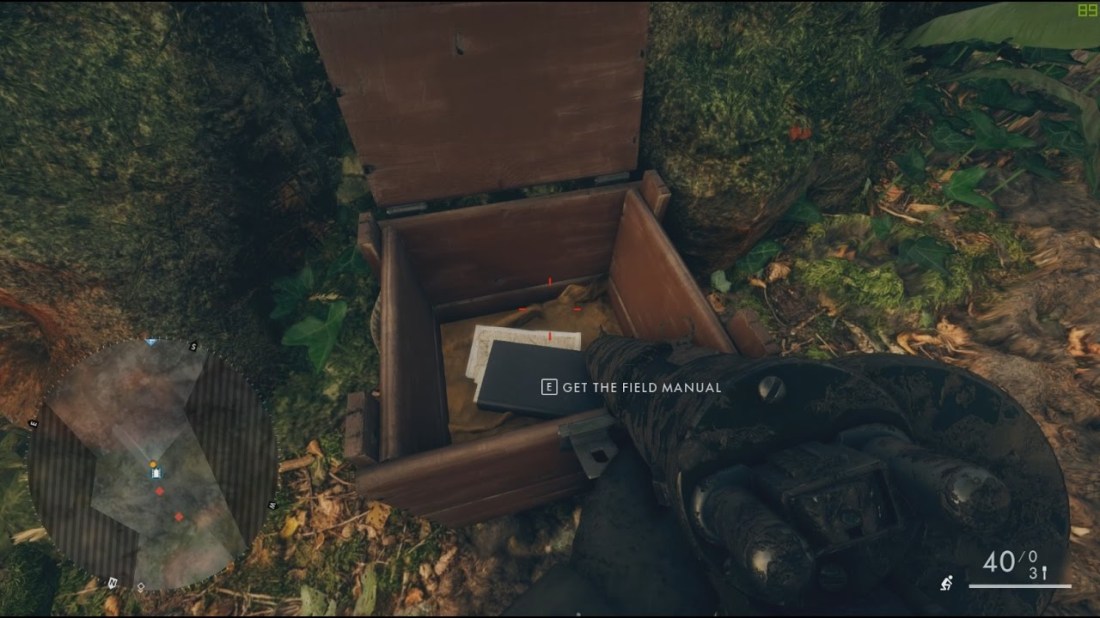
Exhibit A. Field Manuals from Battlefield 1. They all look identical and don’t serve any useful purpose.
Now, I understand why developers include them to some extent. Not only do they allow for extra achievements, but they also encourage exploration. By creating an incentive to explore, developers increase the likelihood the player will experience more of the maps.
Unfortunately, like many other features, over time they have become semi-obligatory.
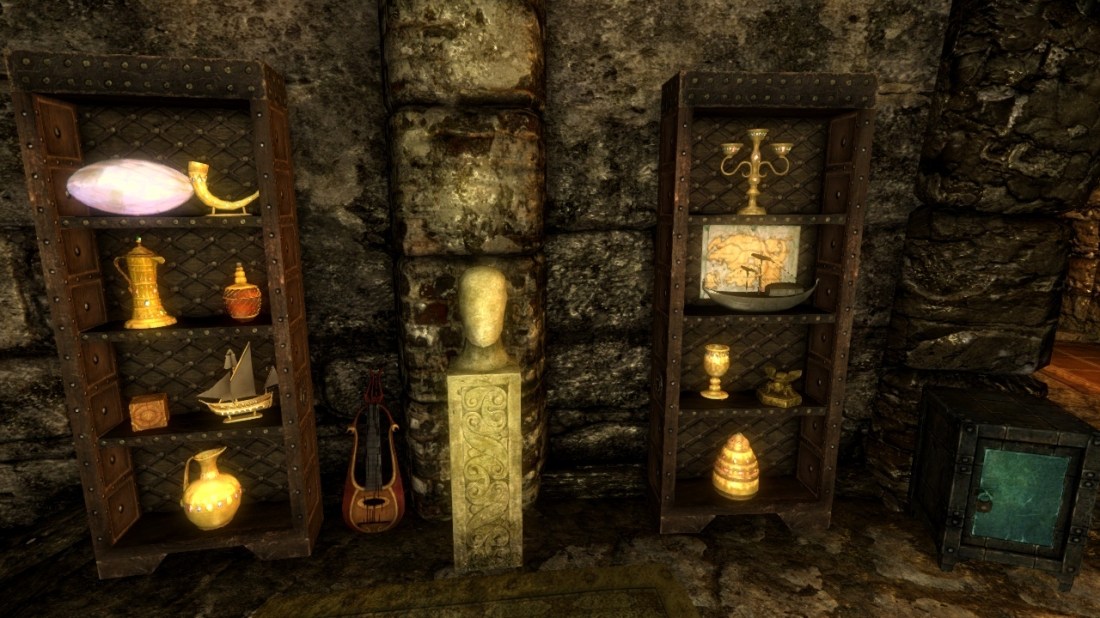
In games where the exploration makes sense, this is a nice extra. One example of collectibles done well is Skyrim. You can find a themed collectible for most main missions of the Thieve’s Guild.
Some of the collectibles, look at how pretty they are!
I consider this a positive use of collectibles for three reasons. Firstly, the collectibles are consistent with the in-story lore. As a member of the Thieves Guild, it makes sense you’d take trinkets from your biggest heists.
Not only does it serve as nostalgia upon reflection, but also adds to the visual quality of the area. In total, it adds and enhances the ambiance of that area. More importantly, it adds character in a way that is consistent with the narrative.
Secondly, it’s clear the developers spent at least a little time with each model. Each one is at least slightly unique to the area from which it came. Further, they all help tell the story of a specific heist you pulled off. These two factors indicate a higher level of forethought and not just “oh, we should add collectibles!”
Lastly, they also serve to advance the player in the game. Each one grants the player a little bit of gold. Additionally, their discovery is satisfying. They often aren’t in an overly obvious place. So finding one becomes a bigger deal due to the extra effort required.
VR is becoming better and mainstream. Will VR enhance or detract from the collectible craze?
I also wonder about the future of collectibles in games given the rise in VR. It seems collectibles could become more immersive and useful.
It would be an interesting twist to see a developer create a puzzle that could only be revealed after all the collectibles are obtained. I think this would encourage developers to give collectibles more thought.
I think this concept becomes especially promising when the reward would be a unique item/cosmetic that is unobtainable otherwise. Collectables would again have a purpose.
VR would also likely result in higher quality collectible models. In a VR environment, every in-game object would be subject to more scrutiny. Without a higher level of attention to detail, players would notice subpar models.
In closing, at the moment, in-game collectibles are hit or miss. When implemented well, they are a nice addition; however, if they’re thrown in “just because” they are a nuisance.
Future advances in gaming tech and playstyles may very well resurrect collectibles to a more interesting, well-integrated part of a gaming experience. Although I’m currently annoyed by their presence in games they don’t belong, I’m optimistic about their future.
Ah, filing, every intern’s favorite past-time. It is a mind-numbing, seemingly unending task. At a big company, the first time you find the filing cabinets can feel a bit like that scene from Bruce Almighty.
A dramatic reenactment of my first day with the filing cabinets
For a long time, and especially as an intern, I loathed filing. Not only for the previously stated reasons but also because I thought it was busy work. While sometimes it was busy work, filing also allowed me to better understand the company I was working for.
Thankfully, I still work with that company. Now, I can usually find any folder with ease. While this in itself isn’t exciting, the fact that I can then gain information about donor or project history is.
I certainly overlooked this the first time I interned. I didn’t realize just how valuable this information was, and how much I would depend upon it in the future.
Often, because there were fewer files than minutes in my shift, I would spend a decent amount of time looking through the details and history of projects or donors that interested me. Only later did I find out that this was the hope and intention of giving me the task.
Fast forwarding 3 years later (where did the time go?) I now regularly rely on this information to more efficiently do my job and have a better reference for what has previously been done. Although this is an experience thing, I wish this had been explained to me in the past.
Especially to a 17-year-old, filing is the worst. It somehow becomes even more deplorable when you believe it to be busy work. Admittedly, knowing the true intention wouldn’t have helped, but may have at least made it more tolerable.
How I felt whenever there was more filing
Looking back, this is the second reason why the task was valuable. Almost any job, regardless of sector, has its boring parts. Filing is a good way to train interns how to complete the necessary evils without complaining (too much, sorry Max) to do the cool parts of their jobs.
Lastly, filing enforces organization. For the chronically disorganized (I can find everything in my room contrary to popular belief…) it teaches a valuable skill. Although I do better with a bit of clutter, I’ve come to appreciate the value of knowing where things are so I can quickly locate them.
I find being able to locate papers is especially useful when your boss needs that paper right then. In my limited working world experience, keeping your boss happy is a good thing.
Filing is a big, ugly monster that likely won’t go away anytime soon. Despite its often undesired presence, there are some benefits for interns and professionals alike. So, I’d like to finish with a small apology.
Dear Filing,
I’m sorry my entitled attitude made me hurl many unsavory adjectives in your direction. I have come to appreciate your unique strengths and benefits. I will no longer say these things about you and will acknowledge the value of our time together. I hope you can forgive me.
I’m going to try something different this time with an article mini-series. This is an idea that I want to explore in more depth while also gaining more experience with researching for an article instead of just writing from the top of my head.
This first entry in the series is going to be my personal thoughts and hypothesizes I want to delve into for the second entry.
Catharsis
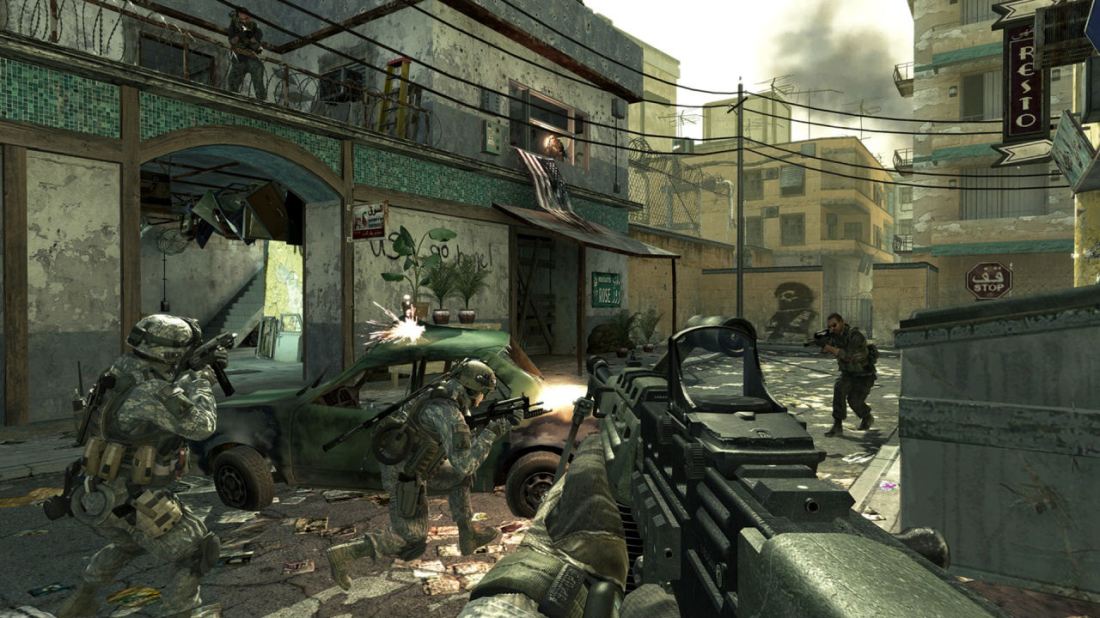
Ah, COD, how I spent many evenings and early mornings playing you with friends…
I believe there is more merit to this theory than we’d like to admit. I was first introduced to catharsis during my Zombie Politics class. Catharsis theory claims that by shooting people in a virtual space the participant is able to let out their anger in a safer, socially acceptable way.
Like many males, I love a good FPS, especially after a long day at work. I look forward to jumping into a casual lobby of CS:GO or Overwatch. Even better, is when I share this experience with a couple of friends.
I’m able to kill two birds with one stone in this way. Not only do I get to bond with my friends, which is vital for my happiness, but I also get to let off steam. It is especially satisfying when you do particularly well in these games. I feel a sense of satisfaction and accomplishment which is sometimes missing from my professional career.
Although the accomplishment is different from catharsis, it is not unrelated. I feel more accomplished because I’m better able to destroy my enemies and regain a sense of control I sometimes lack otherwise.
In the next installment of this series, I’d love to explore psychological research done into the relationship between video games, catharsis, and participant health.
Displacement & Escapism
Ah, one of the OG escapism games
I believe this is where video games have the most potential for harm, but if leveraged properly can be beneficial for everyone. Video games can be deeply engrossing, especially for those who lack better real-world alternatives or are highly imaginative.
I’m sure many of you can recall at least one story of someone who became so lost in WoW that they didn’t emerge from their room for days. Although not to this extent, I use to go on almost day-long benders with games that caught my interest.
Part of the reason for this is people believe that they are their character. They become so engrossed in this much more bad-ass version of themselves that they don’t want to return to being their real-life self.
Clearly, when done to excess, this is harmful and damaging; but, could a microdose of this be helpful? To create this bad-ass version of themselves, they must identify some traits that they want. Further, they must have an active part in shaping their online persona’s ability.
Because of this clear causal link (the player does certain actions, this leads to a better character), I wonder if it would be possible to utilize certain games in combination with CBT to help people with low self-esteem.
In the next installment of this series, I want to further distill the research between gaming, CBT, persona, and self-esteem.
Gradual Exposure through VR
Just one example of VR being utilized in someone’s physical recovery
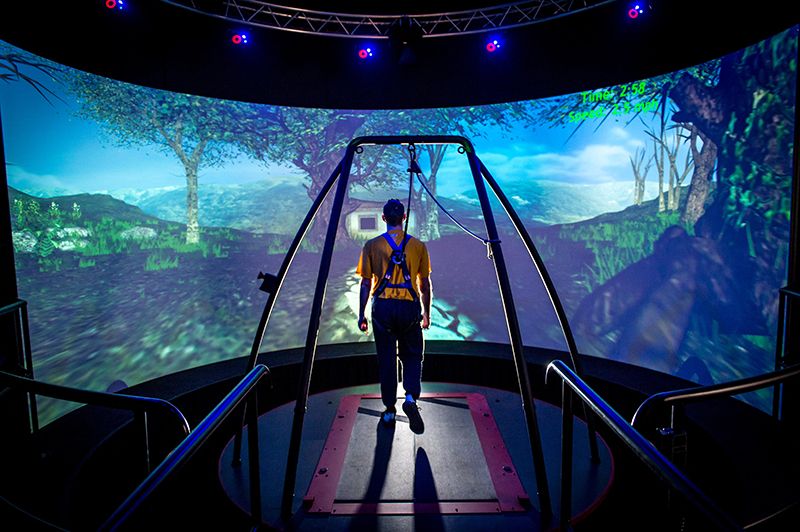
Although the first two ideas I proposed are fun thought experiments worth further inquiry, I believe this is where video games change the future. We are already seeing VR be applied in specific physical and mental therapies. As pictured above, it can help people stay motivated with a long, arduous physical recovery.
Aside from physical recoveries, I also believe it can help heal emotional trauma. There are promising studies suggesting VR is a safer way to perform an already accepted practice of gradual exposure therapy. Specifically, in veterans, VR has seen amazing initial results.
I believe that we have just scratched the surface of possibilities with VR. As VR becomes more difficult to distinguish from reality, VR could be used to condition people to a variety of situations as well. This could range from helping people with social anxiety master the basics of socializing to teaching people on the Autism Spectrum how to better deal with external stimuli.
Although the tech is still fairly young, it holds great promise and could prove to be a wonderful complement to traditional therapies, just like music and art. Thus, for this last avenue of discovery, I want to explore the development of music and art therapy to see where video game therapy may be in comparison to these established methods.
Wrapping up Part 1
Video games are often blamed for many world ills. Although I don’t believe this blame is entirely unearned, I think a better approach would be to treat it like other forms of art. It has great power and peril because it taps into more of our senses than most other mediums.
In my view, this is the strength of games in a therapeutic sense. If properly researched and vetted, I believe virtual environments can weave together several proven forms of therapy for a more powerful effect.
Video games could also serve as a form of self-therapy. When proper precautions are taken to ensure they aren’t abused, video games serve as a great form of stress relief and even social bonding. Given more research, it may be possible to find the optimal genres for invoking certain mental states, just like we can currently do with music.
Starcraft II (SC2) changed my life. It helped me make friends, forced me to become more disciplined and patient, and taught me the value of sustained hard work. I fell in love with this game. More importantly, it was one of the first things I stayed interested in and dedicated myself to for an extended period of time.
Although some may slam video games as leading to unproductive people, I argue that like any media it has the potential to connect or isolate. Video games effects depend on how they are used. At least in my case, SC2 positively impacted my life and taught me some valuable life lessons along the way.
Some of you may be reading this and wondering “what is Starcraft II?” Well, for those uninitiated, here is a quick primer on the video game that made my junior year of high school bearable.
Starwhat?
Welcome to the insanity!
To quickly summarize, Starcraft II is an RTS (Real Time Strategy) game. The aim of the game is to build your base while trying to destroy your opponents. Although simple sounding, it is anything but.
Throughout the game, you have to constantly make decisions on whether to build more bases for more resources or to build more units. Further still, you have to decide which units to build based on how long the game has been going on and what you think your opponent is doing. Oh, and did I forget to mention all these decisions had to be made in real time?
If you wanted to get good at the game like I did at the time, then you spent many hours perfecting the perfect opening (like in chess) and learning counter-play. This exact need led me to make friends through the game.
Lesson 1: Making Friends
This game took a ton of practice before you became anywhere halfway decent. One reason for this is just when you thought you understood how your opponent would play, you would run into something you never saw before and have to figure out how to counter it.
Because of this need for constant iteration, people often sought practice partners to make the monotony of practice more fun. Also, although there was AI, at the low levels it was totally predictable and at the highest settings, it was too fast for new players to do anything against.
This led me to seek out and find a few online friends at a similar ranking as me (more on this later) to practice with. It was nice because we got better at the game together while enjoying laughs along the way. It made the experience more enjoyable and let me feel a human connection, which was largely missing from my life at that time.
Despite feeling mostly isolated, I still did have one or two friends I could play the game with. Granted, none of them got into it nearly as much as I did, which caused minor friction later, but it was still a nice way to connect with people IRL (in real life.)
Lesson 2: Patience and Discipline
Many days I felt like this robot, putting in the passion and work even before the results were there
Because of how the rankings in the game worked, and the value of compounding experience, you had to play every day in order to advance.
Some days this was easy. I would log in, go on a winning streak, and proceed to have a great hour or so of play time. Other days, it felt like chewing on glass. I had a bad day at school, lost the first game, and tilted, which led me to lose all my other games and slide in the rankings.
Whenever I would want to throw in the towel, I would remember the advice of Day[9], a major broadcaster of SC2 when I played, and sit down for one last game. Even if that game was a loss, I felt better because I put in the work and knew I could always gain ground again the next day.
At first, I didn’t feel like I was improving. I was proven wrong within a month when I advanced out of bronze (the lowest rank) and into silver (the next rank.) Considering I had only put in about 30 hours into the game at this point where many people put in 100+, I felt this was good progress.
To this day, I credit my ability to sit and grind through tasks, even if they are unpleasant, to the practice I gained while trying to master Starcraft II.
Lesson 3: The Value of Hard Work
I ended my SC2 days in Top Gold which meant I was in the top half of all North American players
After about three months of play, I finally reached my personal goal, to reach top gold or low platinum. I cannot explain my excitement at seeing the small, shimmering emblem following a hard-fought victory.
Shortly after this point final exams rolled around and I had to dedicate more of my time preparing for those before I went to college, but the glow of reaching my goal followed me.
For the first time in a long time during my junior year of high school, I felt proud of myself and hopeful for the future. Some may claim this is an extreme reaction to a digital medium, but I would challenge their assumption. People understand and accept when others are moved to tears by an amazing musical performance. Video games are another art form, able to invoke deep emotion in the player(s) at their peak.
Lesson 4: Even Good Things End
Unfortunately, as the year drew to close and final exams crept closer I wasn’t able to keep up with the game. I was okay with this though because I got what I needed out of it. Even today I still have a bittersweet fondness of this game.
Although it reminds me of a fairly dark period in my life, it simultaneously reminds me of the power of self-belief. I bought this game to let off steam and seek a challenge I was unable to find in my academics, but I got more than I bargained for.
In this game, I found community through those I played with and the streamers I compulsively followed. I found other nerds like me, which made me feel much less alone. I also found out that I truly could be good at things other than school if I was willing to put in the time and effort.
Although this game has now been largely forgotten by the esports and gaming community as a whole, it will always hold a special place in my heart and helped form my beliefs which carried me to success in university.








 Apprentice Adult