The Value of “Two Crappy Pages”

The hardest part of doing something is getting started. From my experience, this is because of mental resistance and unfair expectations. I often believe I shouldn’t do something unless it’ll be perfect. My mentality on this count is flawed for two reasons.
you-are-almost-there-1-638
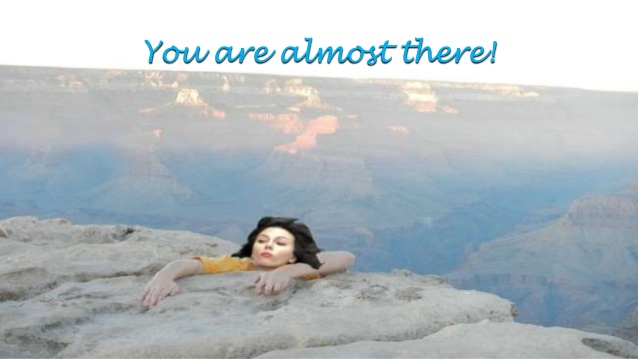
What trying to produce perfect work feels like. Except, there’s another mountain at the top. 

The first way that this thinking fails is that it would exclude good or even great work. Ignoring quality, but imperfect work would be detrimental to society as a whole.

I personally enjoy and find value in Newtonian Mechanics. If I were to only accept perfect works, I would have to ignore this useful framework. Although it fails at the extremes, for a majority of uses traditional mechanics is perfectly fine.

Similarly, we wouldn’t be able to listen to most of the songs we enjoy, observe most of the art we love, or partake in most of the work we do daily. Perfection is impossible. Without allowing imperfect work, most of what we produce, we’d dramatically reduce our quality of life.
laotzu1-2x
This quote resonates deeply if you’re pursuing mastery of a craft.

The second way is because it prevents you from starting. Mastery is only obtained through repeatedly working on your craft. Without the constant reiteration, you never gain the necessary experience of mending your mistakes.

My beliefs about mastery come from Cal Newport. In his book So Good They Can’t Ignore You he discusses an experiment. Students in an art class are given two choices, either be graded on 1 pot or the combined weight of all.

Many people would expect the first group to produce a higher quality product. Paradoxically, this isn’t the case. Instead, the group focused on quantity generally produced higher quality ones.

This is because the second group had more experience overall. The experience led to better designs and fewer critical errors. More time in the arena, without caring about quality, allowed for better quality to emerge.
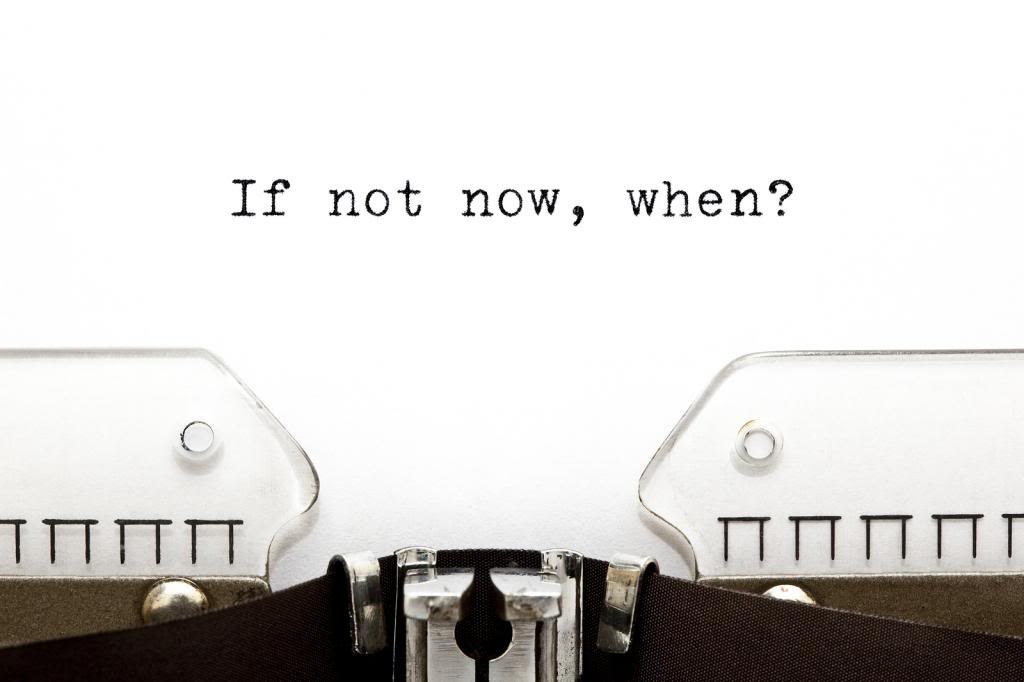
bigstock-typewriter-if-not-now-when-36970594_zpsd83dce80
Why I write at least 500 crappy words per day. 

So, where does “two crappy pages” come from? More importantly, how is it related to my tangent?

When I was looking up advice for aspiring writers, this frequently popped up. Steven King said this for two reasons.

The first reason concerns professionalism. One definition of a professional is someone who shows up long after a task is easy or fun. Producing crap writing isn’t fun. However, all writers know that you get paid by a final product, and the only way to get a final product is to have a draft.

If one embodies this definition of professionalism, they are likely to see more success in any field and vocation.

The second reason relates to momentum. If you’ve heard of a Pomodoro session, this is a writers equivalent. 500 crapy words encourage you to start because the bar to entry is so low. Often after this goal is achieved, you’ll want to continue writing.

Even if you don’t continue writing after “two crappy pages,” you still made forward progress and can safely disengage. This technique ultimately becomes a win-win. As long as you follow through, some good emerges regardless of your choice after.

interrogation20room
I confess dear reader, I wrote a meta-article.

Oh, I have one last confession. I used this ideology to write this article. My mind currently wants to do nothing productive, but I need to write something. I don’t need to write a masterpiece.

Allowing myself to write a “crappy two-page” post took all the pressure away and made the task more enjoyable. It may have taken me an hour to produce this article, but that’s okay.

I still accomplished my goal and added another pot to my collection. Eventually, I’ll be able to make these kinds of articles faster and of higher quality because of the reps I’m putting in now.


 

Post College (Relationships)

Relationships are one of the most valuable things to me. I have a few close friends and wonderful parents who form the bedrock of my life. I would also like to develop a relationship with a significant other when I’m a little better.

Friendships were easy and fun while in college, especially during freshman and even sophomore year. Unfortunately, easy friendships become scarce after college. In this article, I intend to break down the change (or lack thereof) in several of my relationship categories.

Romantic Relationships

figures-by-red-heart
Aww, how adorable!

I thought dating was hard in college. I was completely wrong.

Dating is much harder in a post-college world. Between the long laundry list of obligations, attempting to start a career, and spending time with friends, dating is an accomplishment.

I also have yet to find anyone that is too interested in me romantically. Albeit, the dating pool is a bit small where I live, but still, occasionally that hurts the little pride I have.

A romantic relationship has been continually elusive for me. I’m currently taking steps to try and change this, but for now a significant other is absent while I make myself a more worthwhile partner.

So for now, not much has changed except the game has become more difficult. I intend to report changes in this within the next couple of years!

Friendships

maintaining-friendships-resize-1220x686
Ah, good memories with friends at the beach!

Good friendships are hard to maintain. Many friendships fade after the convenience disappears.

For my true friends reading this, thank you. I’m so thankful that I have several strong friendships which have endured this tough transitional period. I’m still geographically close to many of my friends which certainly helps. Aside from close proximity, we also put effort into keeping in contact which helps keep the relationships strong.

One thing I’ve realized in hindsight is how I took the friend time for granted in university. It is so much harder to get together with friends now than while in college. For anyone in college reading this, my humble piece of advice would be to cherish the time with your college friends and create kick-ass memories.

Although some of the college friendships will fade, the memories made together won’t. I still fondly remember late nights, impromptu road trips, and grand adventures taken with close friends.

Parents

aggie-parents-families-744
They come in all different types, but all form you into the person you are today

This relationship is the one that has evolved the most for me pre and post-college. Unlike many 17-year-olds, I was always pretty content with my parents. Although I occasionally yearned for a bit more freedom, there wasn’t an overwhelming need to escape.

Weirdly enough, I had my “rebellious phase” mid-way through college. Usually, this was after extended stays with my family. In fairness, my agitation was more at the lack of things to do while back home, but still, it transferred onto my parents.

This narrative changed after my time in South Africa. While enduring the transitional pains, they were my biggest supporters. I realized their love and affection was truly unconditional. They also offered sage advice that saved my bacon on more than one occasion.

I’m currently living with them and have mixed emotions. Firstly, I’m thankful my parents are gracious enough to welcome me back into their home. I know it hasn’t been easy, but their patience with me has been invaluable while I figure out “how to adult.”

I also have a weird bittersweet feeling. It may be one of the last holiday seasons I get to spend with them. While excited and thankful for the opportunity, it’s a sad thought. It’s just another sobering reminder of everything’s impermanence.

Until recently, I also harbored a little sadness at moving back home. In my mind, because of social expectations, I thought it was defeat. I’m now starting to realize that it’s a strategic move. My experience abroad also taught me that multi-generational households aren’t uncommon globally.

I find it helpful to remind myself of this fact. It allows me to enjoy the time and perks of living at home without the guilt. This doesn’t mean I don’t eventually want a place of my own, just that I’m able to be more content with where I am.

Closing Thoughts

Relationships are vital for personal happiness and success. As I transition away from the life of the student, I’m learning how to navigate the changing waters. I’m thankful for all the experiences I’ve had so far, and I cannot wait to share my next adventures with those who matter most to me.

Making Peace with Patience

Just wait. Still wait, don’t become a tree, but wait. Wouldn’t you like to know what this article is about? Well, that’s unfortunate, I guess you’ll just have to be patient until I get to the point.

When seeking out advice on how to live a more successful life, the adage of patience is a virtue is often thrust into focus. At least from the outside, this seems like solid advice. To paraphrase Simon Sinek, all the human aspects of life that make it worthwhile are slow. Relationships are slow, meaningful careers are slow, skill mastery is slow.

It is the duration of effort required to obtain these nearly universally chased things which grant them value; however, because I am so use to instantaneous or near instantaneous gratification, these truths are hard to swallow.

I’m often dissatisfied with myself and my lack of socially accepted success. As an antidote to this, I often spend exorbitant amounts of time looking up ways to improve myself. I’ll discover articles praising the values of patience and mindfulness. I believe these traits are highly linked because being more mindful makes patience easier.

Patience, like many traits, is one that needs to be cultivated and constantly reinforced before it becomes a habit. A cruel irony is that in order to cultivate the ability to wait for a prolonged reward, one must often posses the ability to find joy in the daily grind that leads to the reward.

Thankfully, this is where mindfulness comes to the rescue. The whole point of this philosophy is to live in the moment, with no conception of past or future. It may seem paradoxical that mindfulness is a companion of patience. After all, isn’t the idea of patience to wait for something yet to happen?

Of course silly, but this doesn’t mean that you can’t find happiness in the interim moments. More importantly, it is often this interim happiness that allows us to continue driving forward towards a goal we deem important.

While we acknowledge the important of fostering both of these skills, their development is made more difficult by a culture of instant gratification and 24/7/365 interaction. An important part of both skills is their requirement for space and quiet. The ability to reflect and put in the work is critical for fostering both these skills.

I find it difficult to integrate mindfulness in my life because there are always a million tantalizing distractions just an arm reach away. Then, I find myself less likely to delay these rewards because I’m so distracted thinking about the past or future, that I’d rather take the distraction to ease the cognitive pain.

For example, the entire time I’ve been writing this article (for those keeping score at home, this is draft 3) I’ve wanted to look at my phone, check social media, look at cute photos of kittens, and do anything but the hard, sustained work of producing this likely mediocre article.

By some small miracle, I’ve been able to stay on task, but it has been a constant battle. Unfortunately, if I were to cave to my short-term desires, as opposed to delay the gratification, I’d be sacrificing my longer term goals. This would then further decrease my ability to be present and patient for some long away reward.

While doing things now that I likely won’t see dividends for until much later is painful, I’m slowly making peace with the process of waiting. As I look into the back stories of those I admire, I realize the “overnight success” is anything but.

For me, this makes the process easier because when I start to berate myself for my lack of progress, it helps to remind myself that most of my heroes became so not through freak radiation exposure, but rather the more mundane daily grind of their craft. When this awareness creeps in, it then becomes easier to wait, since I no longer need to deal with the unpleasant emotions.

Another way that I’ve tried to integrate more patience and mindfulness into my life is through my transit. Unless I need to get somewhere fast, when I walk I force myself to wait for the crossing signal instead of darting across the street at the first opportunity. When I’m driving I force myself to go only a little above the speed limit, mostly to keep others happy. Finally, I occasionally elect to take public transit to places I could get to faster by simply driving or walking.

These decisions aren’t easy. I end up fighting my impulses for more and faster at every turn. That’s the point. I hope by welcoming the present moment and deciding to wait in the short-term, some of this skill will transfer to the long term.

Ultimately, patience and I have a strained relationship, but I’m working to mend it. I believe that by repeated choice and welcoming the moment without judgement and without concern for past or future, I can become a better man and make my dreams come true.


The Journey Begins

Why Apprentice Adult?

For me, the title is a double entendre. Firstly, since I’ve recently become a “legal adult”, I view myself as an apprentice to all of the additional responsibilities, expectations, and opportunities presented to me. Since I have only been in the game for a moment, I have much to learn, thus the apprentice title.

The second reason for the title is because of my intention to use the next few years for personal and professional growth. Inspired by the work of Scott Young, Cal Newport, and Gary Vaynerchuk, I’ve realized in order to create the type of life I want, I need to get so good I can’t be ignored (thank you, Cal, for this phrasing.)

Despite my decision to commit to one craft, I also personally believe that variety is the spice of life, and innovation results in the cross-sections no one else plays in. Thus, to validate my need for novelty and expand my horizons, I’ve decided to explore various hobbies.

My intention to constantly explore new activities is the second reason for the name. In my view, there is often a self-imposed stigma about adults trying new things or learning new skills. Being a beginner is highly uncomfortable. This is especially true for people like myself that have an ego.

The Intention

At this point, you’re probably thinking to yourself “that’s a nice manifesto, but what’s the point?” For me, the intent is two-fold. Firstly, I’m hoping to derive benefit from writing the blog posts and trialing different skills.

Although the writing benefit should be self-evident, I’ll expand upon it briefly.  I’ve decided to dedicate myself to written and verbal communication. To do it well, I must write, a lot. Further, a majority of my work will be average or below (thanks to statistics for this sobering reminder.)

In order to produce the 10,000 shitty first drafts, I’ve decided to write a bi-weekly blog. Not only will this force me to write on a consistent schedule, which will be required if I want to make writing a large component of my career,  but will also give me practice at properly writing in a near-universally understandable way.

Aside from improving my ability to communicate via the written word, I hope this exercise will foster more humility into me. One of my favorite characters from Avatar the Last Airbender said that true humility is the only antidote to shame, and boy do I regularly feel shame.

Iroh
For those who don’t know, this is Iroh and he’s pretty great!

I believe attempting to foster more humility will benefit my personal life immensely. Humility may also help me combat the demons of self-loathing and self-doubt that plague me. Through becoming a perpetual beginner, it is my hope that in time I will learn to regard myself kindly, despite the obvious lack of skill in a particular task.

Lastly, through publishing it in a public forum, it is my hope that at least one person can gain some nugget of wisdom from my failures and successes. I also hope that seeing a fairly unremarkable young adult attempting to learn new things and better themselves despite their self-doubt will inspire someone else with a similar temperament to consider the same.

What Comes Next

So, if you’ve made it this far, first let me say thank you! I really appreciate the time you spent reading an article that’ll likely provide you with little to no value. Secondly, with that being said, I’m going to attempt to make sure the next articles do not fall into this vein.

Therefore, if you decide to keep reading after this one, here’s what you should expect. I plan to publish an article every other Sunday. In this article, I plan to chronical any new novel things that happen in adulthood, say, first time investing, taxes, etc. In addition, I also hope to chronicle my progress with whatever new skill or activity I’m trying to learn.

It’s my belief that you’ll gain some kind of value through these posts, whether it be entertainment by laughing at my stupidity, or maybe, just maybe, a neat tip or trick for a new or existing hobby. Once again, thank you for reading this far and I hope you’ll stick around for the next post!