VISTA Voyage Update 1

Not in Kansas Anymore…

Image result for welcome to rhode island sign
A new chapter begins!

“What the hell am I doing?” as I saw the “Welcome to Massachusetts” sign, this thought raced through my mind. Holding back the occasional tear of anxiety I kept driving on.

Eventually, I reached my destination, my new home in Rhode Island. I hoped my roommates would be nice and chill, but I had no idea what I was about to walk into.

Thankfully, my gut happened to be right settling on this particular house. Immediately, Joe, one of my roommates, was there to greet me. He helped me settle in and even gave me a bit of food since I hadn’t been able to shop yet.

In the days to come, I would then meet my other two housemates, Sean and Seth, who were also warm and inviting. In this regard, I was incredibly fortunate and thankful.

Staring into the Void

abyss
Don’t look too long, it may stare back.

After a couple of days of settling in and getting a feel for my new home, it was time to go to my service site for training (work, but I’m not supposed to say that haha.) Over the next four days, I met two amazing people that I’ll be sharing this journey with, Maude and Sarah.

As we progressed through the training, two thoughts emerged. First though, “I’m so lucky to have such talented, driven, and compassionate co-workers.” The second thought was “I’m so inadequate, how the hell did I get in? ”

Hopefully, as the year progresses, I’ll be able to produce work which counters the second narrative, but time will tell.

Attempting to Adult

In addition to getting used to a new work environment and routine, I actually have substantial bills to pay again. Admittedly, I’m stressed out about how to make ends meet, but that’s part of the challenge.

I’m also navigating the world of taxes, all types of insurance, and other shenanigans. Part of my goal with this blog is to help another “apprentice adult.” To this end, I’ll be listing what I did and how it turned out so others can learn from my failures.

Additionally, recognizing that my ~800/mo won’t be quite enough to cover all my expenses, I’ll be applying for SNAP benefits and seeking out part-time work. Ideally, I want to use my writing and research skills to make side cash, but we’ll see. Also, Donald gently reminded me that plasma donation is a thing, which I’ll likely start doing.

On the Arrow of Time

Image result for arrow of time
Ever expanding, ever moving.

So, at the moment, I have a lot on my plate, but the arrow of time moves only forward. My goals by the next update (done every 2 weeks) are to have my bare essentials sorted, find one fun activity to do outside work, and get back into reading.

On the bright side, this gives me ample excuse to explore the library here in RI! Yay library exploration!

Well, I think that’ll do it for this update, there will likely be more in the next couple as more stuff starts happening (job updates, adulting updates, etc.) Until next time, have a wonderful day/evening! 🙂
The Video Game Collectable Con

Virtual collectibles are lame. Generally, they have all disadvantages of a scavenger hunt without the tactile satisfaction. Further, most games don’t spend a ton of time making the collectibles unique or fascinating.

Lately, I’ve been playing several single player games. Without fail, all of these games have some kind of item that I can collect while roaming the world.

maxresdefault
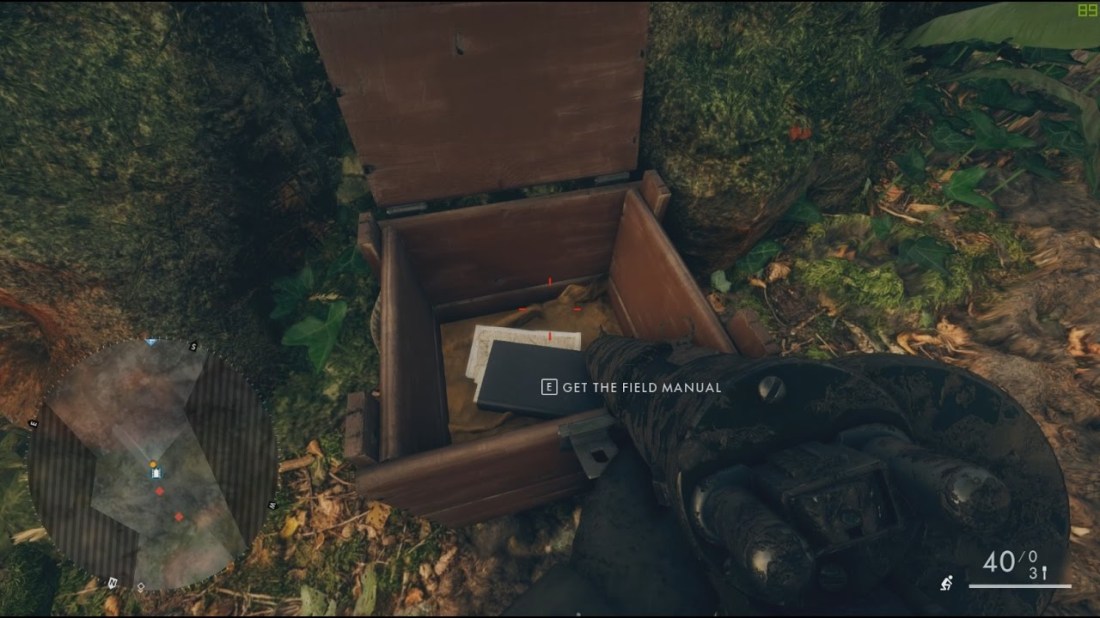
Exhibit A. Field Manuals from Battlefield 1. They all look identical and don’t serve any useful purpose.

Now, I understand why developers include them to some extent. Not only do they allow for extra achievements, but they also encourage exploration. By creating an incentive to explore, developers increase the likelihood the player will experience more of the maps.

Unfortunately, like many other features, over time they have become semi-obligatory.

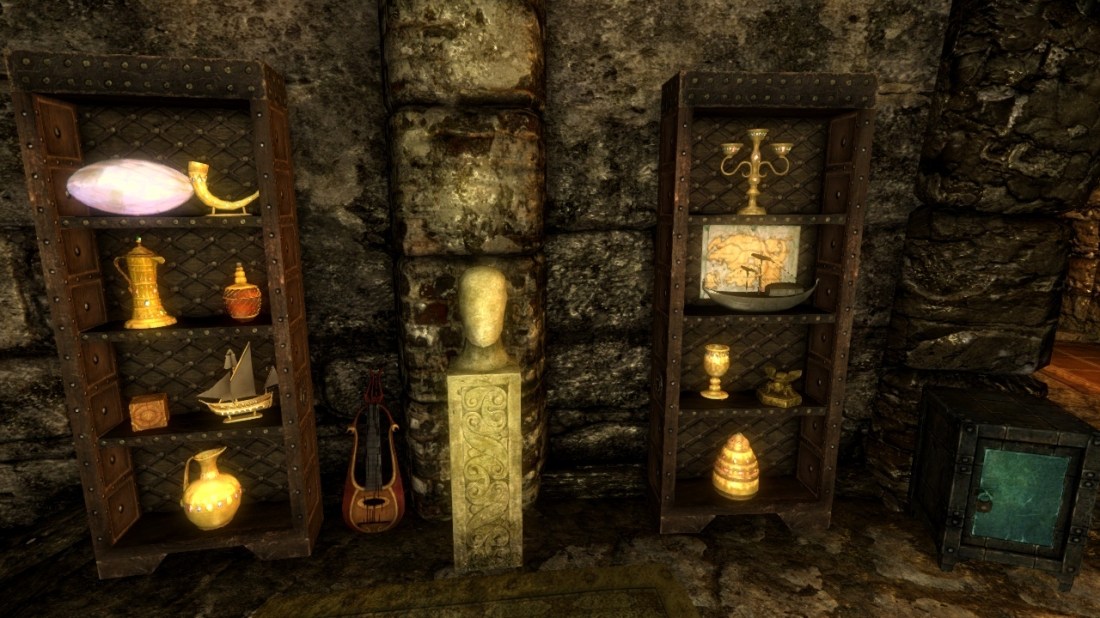
In games where the exploration makes sense, this is a nice extra. One example of collectibles done well is Skyrim. You can find a themed collectible for most main missions of the Thieve’s Guild.

13304-0-1509645339
Some of the collectibles, look at how pretty they are!

I consider this a positive use of collectibles for three reasons. Firstly, the collectibles are consistent with the in-story lore. As a member of the Thieves Guild, it makes sense you’d take trinkets from your biggest heists.

Not only does it serve as nostalgia upon reflection, but also adds to the visual quality of the area. In total, it adds and enhances the ambiance of that area. More importantly, it adds character in a way that is consistent with the narrative.

Secondly, it’s clear the developers spent at least a little time with each model. Each one is at least slightly unique to the area from which it came. Further, they all help tell the story of a specific heist you pulled off. These two factors indicate a higher level of forethought and not just “oh, we should add collectibles!”

Lastly, they also serve to advance the player in the game. Each one grants the player a little bit of gold. Additionally, their discovery is satisfying. They often aren’t in an overly obvious place. So finding one becomes a bigger deal due to the extra effort required.

star-wars-battlefront-vr-x-wing-126e141c-1ef4-4102-a7cc-324d85f8b9de
VR is becoming better and mainstream. Will VR enhance or detract from the collectible craze?

I also wonder about the future of collectibles in games given the rise in VR. It seems collectibles could become more immersive and useful.

It would be an interesting twist to see a developer create a puzzle that could only be revealed after all the collectibles are obtained. I think this would encourage developers to give collectibles more thought.

I think this concept becomes especially promising when the reward would be a unique item/cosmetic that is unobtainable otherwise. Collectables would again have a purpose.

VR would also likely result in higher quality collectible models. In a VR environment, every in-game object would be subject to more scrutiny. Without a higher level of attention to detail, players would notice subpar models.

In closing, at the moment, in-game collectibles are hit or miss. When implemented well, they are a nice addition; however, if they’re thrown in “just because” they are a nuisance.

Future advances in gaming tech and playstyles may very well resurrect collectibles to a more interesting, well-integrated part of a gaming experience. Although I’m currently annoyed by their presence in games they don’t belong, I’m optimistic about their future.

The Value of “Two Crappy Pages”

The hardest part of doing something is getting started. From my experience, this is because of mental resistance and unfair expectations. I often believe I shouldn’t do something unless it’ll be perfect. My mentality on this count is flawed for two reasons.

you-are-almost-there-1-638
What trying to produce perfect work feels like. Except, there’s another mountain at the top. 

The first way that this thinking fails is that it would exclude good or even great work. Ignoring quality, but imperfect work would be detrimental to society as a whole.

I personally enjoy and find value in Newtonian Mechanics. If I were to only accept perfect works, I would have to ignore this useful framework. Although it fails at the extremes, for a majority of uses traditional mechanics is perfectly fine.

Similarly, we wouldn’t be able to listen to most of the songs we enjoy, observe most of the art we love, or partake in most of the work we do daily. Perfection is impossible. Without allowing imperfect work, most of what we produce, we’d dramatically reduce our quality of life.

laotzu1-2x
This quote resonates deeply if you’re pursuing mastery of a craft.

The second way is because it prevents you from starting. Mastery is only obtained through repeatedly working on your craft. Without the constant reiteration, you never gain the necessary experience of mending your mistakes.

My beliefs about mastery come from Cal Newport. In his book So Good They Can’t Ignore You he discusses an experiment. Students in an art class are given two choices, either be graded on 1 pot or the combined weight of all.

Many people would expect the first group to produce a higher quality product. Paradoxically, this isn’t the case. Instead, the group focused on quantity generally produced higher quality ones.

This is because the second group had more experience overall. The experience led to better designs and fewer critical errors. More time in the arena, without caring about quality, allowed for better quality to emerge.

bigstock-typewriter-if-not-now-when-36970594_zpsd83dce80
Why I write at least 500 crappy words per day. 

So, where does “two crappy pages” come from? More importantly, how is it related to my tangent?

When I was looking up advice for aspiring writers, this frequently popped up. Steven King said this for two reasons.

The first reason concerns professionalism. One definition of a professional is someone who shows up long after a task is easy or fun. Producing crap writing isn’t fun. However, all writers know that you get paid by a final product, and the only way to get a final product is to have a draft.

If one embodies this definition of professionalism, they are likely to see more success in any field and vocation.

The second reason relates to momentum. If you’ve heard of a Pomodoro session, this is a writers equivalent. 500 crapy words encourage you to start because the bar to entry is so low. Often after this goal is achieved, you’ll want to continue writing.

Even if you don’t continue writing after “two crappy pages,” you still made forward progress and can safely disengage. This technique ultimately becomes a win-win. As long as you follow through, some good emerges regardless of your choice after.

interrogation20room
I confess dear reader, I wrote a meta-article.

Oh, I have one last confession. I used this ideology to write this article. My mind currently wants to do nothing productive, but I need to write something. I don’t need to write a masterpiece.

Allowing myself to write a “crappy two-page” post took all the pressure away and made the task more enjoyable. It may have taken me an hour to produce this article, but that’s okay.

I still accomplished my goal and added another pot to my collection. Eventually, I’ll be able to make these kinds of articles faster and of higher quality because of the reps I’m putting in now.


Finding Fun in Tedium

I’m bored. This thought often runs through my head while I’m at work. Since both of my jobs are entry level, I get the privilege of doing a lot of the grunt work. Often, this means I’m folding and mailing letters or moving stuff from one end of the store to the other.

In my experience, there are three ways to not want to shoot yourself while performing these tasks.

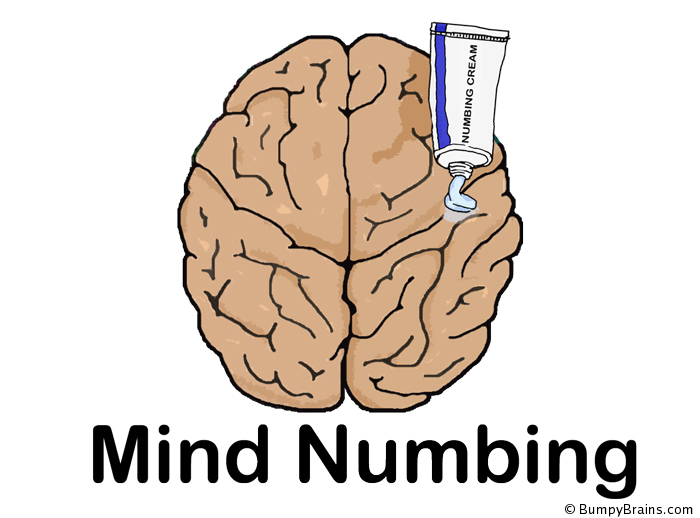
Numb Your Mind

mind_numbing
Ah, a perfect solution…

One way is to numb your mind. This approach is the easiest, but also the least helpful. In my experience mind-numbing leads me to become emotionally unresponsive. This tends to make me more unpleasant to be around. My attention span shortens as my temper contracts and my likelihood of being annoyed skyrockets.

In defense of mind-numbing, you’re often able to quickly complete mundane tasks in this mental state. Because you have omitted everything else, the only thing that remains is the task, which leads to higher efficiency.

On the whole, despite the slight advantage, this strategy isn’t sustainable. I employ this technique sparingly as it makes me feel dead inside. The mental agony is not worth the minor performance improvement.

Banter With Co-Workers

employeees1
Ah, the dream that almost never happens in the workplace.

Co-workers make or break your workplace. If you’re fortunate to have good colleagues, then work tends to be more tolerable. Unfortunately, if you have rotten colleagues then work often becomes more miserable.

Assuming you can joke with your co-workers this strategy works wonders, and even better if the task is repetition based. A half hour task feels like it took mere minutes.

Additionally, unlike mind-numbing, you still usually feel like a human afterward. Although banter tends to work better for extroverted people, it can still work well for introverts assuming you find your co-worker compelling.

One word of caution. This technique can easily slide from proactive adaptation to procrastination. No one likes that co-worker that talks incessantly and doesn’t realize when to shut up and put their head down to reach the deadline.

Despite the slight danger present in this strategy, it’s an overall improvement. Unfortunately, it still has one major weakness. Should you be unfortunate and have less than desirable co-workers, then you most likely cannot use this method. Fortunately, gamification can be used in almost any work environment!

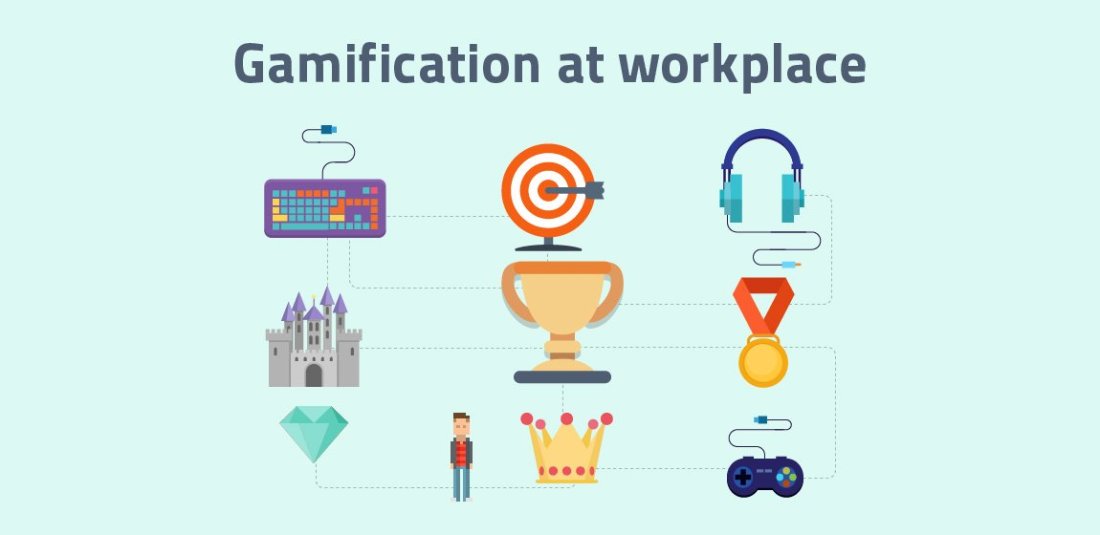
Gamify the Task

how-gamification-can-take-digital-employee-engagem
If you thought I wouldn’t manage to work a game reference into this article, then you were wrong!

I confess I stole this idea. Like all good scholars, I’m a fantastic thief. I first heard this idea from Adam Savage when he discussed his work at Industrial Light and Magic. To create amazing sets for movies like Star Wars, he often had to drill many precise holes.

As you can imagine, this is boring. Adam developed a habit of challenging himself to complete the task faster. To him, this created a clear, tangible goal. Although there were no leaderboards, he did reward himself when he completed tasks ahead of schedule.

This idea of turning something monotonous into a game is the core of gamification.

As humans, we like clear goals with logical steps to achieve them because we can then measure our progress towards mastery. When we make a task a game, we introduce the rules, constraints, and win conditions. The closer we get to our target, the better we feel.

Of course, an obvious danger is to make the goal so easy that it’s impossible to miss. Thankfully, we are our own allies in this case. We know when we do this, so we don’t get the same reward when compared to a hard-fought or near victory.

To properly implement this technique you also need to create incentives for a job well done. One example would be to treat yourself to your favorite snack. A better example is to purchase an item you’ve been wanting relating to your work.

The second example is better than the first because the reward is congruent with the task. In other words, it is consistent with your overall goal of mastery.

Wrapping Up

So, to sum up. If you’re bored with a work task, try gamification. It will make the task more challenging. The optimal challenge always makes a task more rewarding. Further, done well, there will also be a tantalizing reward for a job well done. The best part is this method only requires your imagination and honest assessment.

Making a tedious task fun isn’t only possible, but often a rewarding experience that translates well to the rest of your life.

Games Are Social

Quick, describe to me what you think a gamer looks like! I’d be willing to bet good money that one of two stereotypes emerged. You either thought of an anti-social teen in his almost pitch black room or a 30 something that still lives with their parents.

1008-mwbz-faq-q1
Doesn’t help when popular culture displays images like this

While I believe stereotypes emerge from a hyperbolized truth, these two examples share a damaging theme. Both imply that people who game are unable to socialize. The anti-social stereotype not only damages the industry but can be easily called into question.

Online Gaming Communities

600px-teamliquidnet-screenshot
An online forum I frequently lurked in during my SC2 days. Conversations ranged from the game to the best foods.

Although not every game will have an entire web-based community surrounding it, a decent amount do. Generally, games that create these communities are multiplayer in nature.

Prime examples of games that fostered online communities include Starcraft II, League of Legends, and Fortnite. In the streams and forums dedicated to these games, you’ll see gamers not talking just about the game, but more mundane things like which pie is the superior one.

This sounds a lot like the varied types of conversations people have in person too. It seems that games may just be another hobby people congregate around before discussing their other interests.

I hear the complaints now though, this is one set of cherry-picked examples, surely you can’t make any conclusions from this alone. Unfortunately, that’s true. Fortunately, I have a few more examples to make a compelling argument!

In-Game Interactions

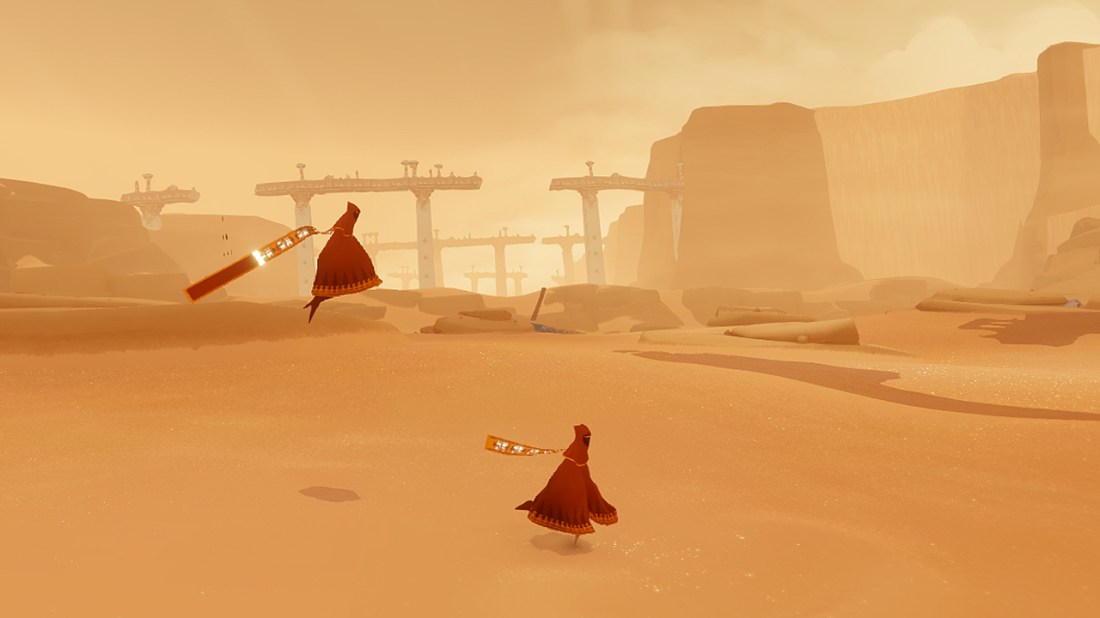
journey game coop
In this game, there is no text/chat. Instead, players must communicate via emotes and movements with their character.

Co-op and multiplayer games require communication. Without it, gamers can’t complete the objectives of the game and walk away sad and without achievements.

Different games also force players to communicate differently. In games like League of Legends and CS:GO, players can chat via text or voice. This makes it very difficult for miscommunication; but, it also allows for 12-year-olds that don’t know how to not scream into their mic.

In contrast, some games only allow players to communicate via emotes. This is especially true in online co-op for games like Portal 2 and Journey. This constraint requires players to better convey their intentions and understand those of their partner. This is an important, transferable skill because traditional “social human” conversation is mostly non-verbal anyways.

Either way, gamers become better at conveying their needs and desires. In turn, they improve their ability to resolve conflict and cooperatively achieve objectives. These are vital social skills for a successful life.

In Person Tournaments

Looks a lot like a sports arena to me. Turns out, this is for a video game called League of Legends.
Looks a lot like a sports arena or concert venue to me. Turns out, this is for a game called League of Legends.

I believe most people who attend sporting events are considered socialized. Especially, if while at these events, they chat with friends and fellow fans about their team and the spectacle they are all watching.

Even if not a lot of words are exchanged, being in the same arena with others and sharing in the jubilation of success or agony of defeat is a very primal human feeling.

Then, how are people who attend video game tournaments any less social? They too are watching a spectacle of skill and sharing in the victory or defeat of their favorite teams. Additionally, these tournaments often have gimmicky things between sets, just like other sports, to gain audience participation.

There seems to be no difference in human behavior during a sports or esports game. Therefore, to claim one activity is social and the other is anti-social is hypocrisy.

In Person Conventions

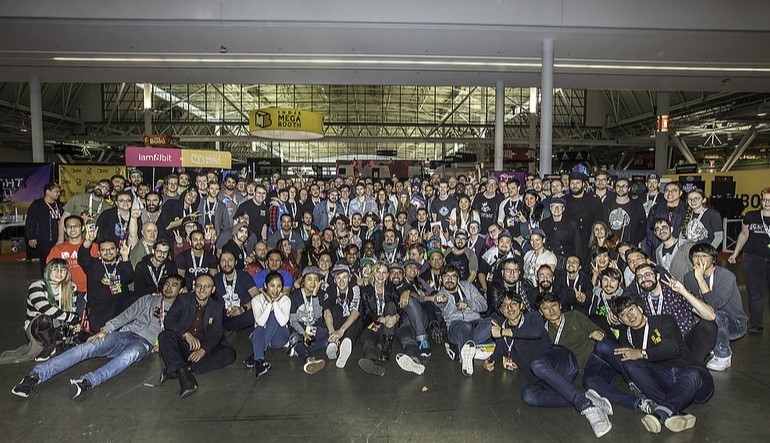
group2
Oh look, a gathering of people at a game convention called Pax East.

Game conventions are similar to those for business or other hobbies. Game conventions show off the newest things in the industry, present opportunities to network, and allow people to meet others who enjoy the same thing they do.

Because of the shared hobby, there is often an instant bond between attendees. In a lot of cases, just like with other conventions, long-term friendships are born at these large gatherings.

Further, those that arrange these conventions are often gamers themselves. These gamers are performing highly social behavior by facilitating an event where people can meet others who share their interests.

Game conventions are like other conventions except the focus is on video games. So, If conventions are social, then video game conventions are also social. This must also extend to the people who attend. If convention attendees are social, then video game convention attendees must be social.

With these two claims, we can now refute the common societal claim. Since some gamers attend video game conventions, not all gamers are antisocial.

Wrapping Up

I have walked you through several examples of how games are social. From the activities within the games themselves to the communities that form around them. I think we need to move away from the perception of games as something only nerds play with. Instead, we should begin considering them as another art medium.

If we view games through this lens, we not only see the value of those who play video games but also of the medium itself.

Post College (Relationships)

Relationships are one of the most valuable things to me. I have a few close friends and wonderful parents who form the bedrock of my life. I would also like to develop a relationship with a significant other when I’m a little better.

Friendships were easy and fun while in college, especially during freshman and even sophomore year. Unfortunately, easy friendships become scarce after college. In this article, I intend to break down the change (or lack thereof) in several of my relationship categories.

Romantic Relationships

figures-by-red-heart
Aww, how adorable!

I thought dating was hard in college. I was completely wrong.

Dating is much harder in a post-college world. Between the long laundry list of obligations, attempting to start a career, and spending time with friends, dating is an accomplishment.

I also have yet to find anyone that is too interested in me romantically. Albeit, the dating pool is a bit small where I live, but still, occasionally that hurts the little pride I have.

A romantic relationship has been continually elusive for me. I’m currently taking steps to try and change this, but for now a significant other is absent while I make myself a more worthwhile partner.

So for now, not much has changed except the game has become more difficult. I intend to report changes in this within the next couple of years!

Friendships

maintaining-friendships-resize-1220x686
Ah, good memories with friends at the beach!

Good friendships are hard to maintain. Many friendships fade after the convenience disappears.

For my true friends reading this, thank you. I’m so thankful that I have several strong friendships which have endured this tough transitional period. I’m still geographically close to many of my friends which certainly helps. Aside from close proximity, we also put effort into keeping in contact which helps keep the relationships strong.

One thing I’ve realized in hindsight is how I took the friend time for granted in university. It is so much harder to get together with friends now than while in college. For anyone in college reading this, my humble piece of advice would be to cherish the time with your college friends and create kick-ass memories.

Although some of the college friendships will fade, the memories made together won’t. I still fondly remember late nights, impromptu road trips, and grand adventures taken with close friends.

Parents

aggie-parents-families-744
They come in all different types, but all form you into the person you are today

This relationship is the one that has evolved the most for me pre and post-college. Unlike many 17-year-olds, I was always pretty content with my parents. Although I occasionally yearned for a bit more freedom, there wasn’t an overwhelming need to escape.

Weirdly enough, I had my “rebellious phase” mid-way through college. Usually, this was after extended stays with my family. In fairness, my agitation was more at the lack of things to do while back home, but still, it transferred onto my parents.

This narrative changed after my time in South Africa. While enduring the transitional pains, they were my biggest supporters. I realized their love and affection was truly unconditional. They also offered sage advice that saved my bacon on more than one occasion.

I’m currently living with them and have mixed emotions. Firstly, I’m thankful my parents are gracious enough to welcome me back into their home. I know it hasn’t been easy, but their patience with me has been invaluable while I figure out “how to adult.”

I also have a weird bittersweet feeling. It may be one of the last holiday seasons I get to spend with them. While excited and thankful for the opportunity, it’s a sad thought. It’s just another sobering reminder of everything’s impermanence.

Until recently, I also harbored a little sadness at moving back home. In my mind, because of social expectations, I thought it was defeat. I’m now starting to realize that it’s a strategic move. My experience abroad also taught me that multi-generational households aren’t uncommon globally.

I find it helpful to remind myself of this fact. It allows me to enjoy the time and perks of living at home without the guilt. This doesn’t mean I don’t eventually want a place of my own, just that I’m able to be more content with where I am.

Closing Thoughts

Relationships are vital for personal happiness and success. As I transition away from the life of the student, I’m learning how to navigate the changing waters. I’m thankful for all the experiences I’ve had so far, and I cannot wait to share my next adventures with those who matter most to me.

Why Filing as an Intern can be Valuable

Ah, filing, every intern’s favorite past-time. It is a mind-numbing, seemingly unending task. At a big company, the first time you find the filing cabinets can feel a bit like that scene from Bruce Almighty.


giphy
A dramatic reenactment of my first day with the filing cabinets

For a long time, and especially as an intern, I loathed filing. Not only for the previously stated reasons but also because I thought it was busy work. While sometimes it was busy work, filing also allowed me to better understand the company I was working for.

Thankfully, I still work with that company. Now, I can usually find any folder with ease. While this in itself isn’t exciting, the fact that I can then gain information about donor or project history is.

I certainly overlooked this the first time I interned. I didn’t realize just how valuable this information was, and how much I would depend upon it in the future.

Often, because there were fewer files than minutes in my shift,  I would spend a decent amount of time looking through the details and history of projects or donors that interested me. Only later did I find out that this was the hope and intention of giving me the task.

Fast forwarding 3 years later (where did the time go?) I now regularly rely on this information to more efficiently do my job and have a better reference for what has previously been done. Although this is an experience thing, I wish this had been explained to me in the past.

Especially to a 17-year-old, filing is the worst. It somehow becomes even more deplorable when you believe it to be busy work. Admittedly, knowing the true intention wouldn’t have helped, but may have at least made it more tolerable.


giphy1
How I felt whenever there was more filing


Looking back, this is the second reason why the task was valuable. Almost any job, regardless of sector, has its boring parts. Filing is a good way to train interns how to complete the necessary evils without complaining (too much, sorry Max) to do the cool parts of their jobs.

Lastly, filing enforces organization. For the chronically disorganized (I can find everything in my room contrary to popular belief…) it teaches a valuable skill. Although I do better with a bit of clutter, I’ve come to appreciate the value of knowing where things are so I can quickly locate them.

I find being able to locate papers is especially useful when your boss needs that paper right then. In my limited working world experience, keeping your boss happy is a good thing.

Filing is a big, ugly monster that likely won’t go away anytime soon. Despite its often undesired presence, there are some benefits for interns and professionals alike. So, I’d like to finish with a small apology.

Dear Filing,

I’m sorry my entitled attitude made me hurl many unsavory adjectives in your direction. I have come to appreciate your unique strengths and benefits. I will no longer say these things about you and will acknowledge the value of our time together. I hope you can forgive me.

Sincerely,


ApprenticeAdult

Video Games’ Power to Heal (1 of 2)

Background

I’m going to try something different this time with an article mini-series. This is an idea that I want to explore in more depth while also gaining more experience with researching for an article instead of just writing from the top of my head.

This first entry in the series is going to be my personal thoughts and hypothesizes I want to delve into for the second entry.

Catharsis

ss16
Ah, COD, how I spent many evenings and early mornings playing you with friends…

I believe there is more merit to this theory than we’d like to admit. I was first introduced to catharsis during my Zombie Politics class. Catharsis theory claims that by shooting people in a virtual space the participant is able to let out their anger in a safer, socially acceptable way.

Like many males, I love a good FPS, especially after a long day at work. I look forward to jumping into a casual lobby of CS:GO or Overwatch. Even better, is when I share this experience with a couple of friends.

I’m able to kill two birds with one stone in this way. Not only do I get to bond with my friends, which is vital for my happiness, but I also get to let off steam. It is especially satisfying when you do particularly well in these games. I feel a sense of satisfaction and accomplishment which is sometimes missing from my professional career.

Although the accomplishment is different from catharsis, it is not unrelated. I feel more accomplished because I’m better able to destroy my enemies and regain a sense of control I sometimes lack otherwise.

In the next installment of this series, I’d love to explore psychological research done into the relationship between video games, catharsis, and participant health.

Displacement & Escapism

220px-wow_box_art1
Ah, one of the OG escapism games

I believe this is where video games have the most potential for harm, but if leveraged properly can be beneficial for everyone. Video games can be deeply engrossing, especially for those who lack better real-world alternatives or are highly imaginative.

I’m sure many of you can recall at least one story of someone who became so lost in WoW that they didn’t emerge from their room for days. Although not to this extent, I use to go on almost day-long benders with games that caught my interest.

Part of the reason for this is people believe that they are their character. They become so engrossed in this much more bad-ass version of themselves that they don’t want to return to being their real-life self.

Clearly, when done to excess, this is harmful and damaging; but, could a microdose of this be helpful? To create this bad-ass version of themselves, they must identify some traits that they want. Further, they must have an active part in shaping their online persona’s ability.

Because of this clear causal link (the player does certain actions, this leads to a better character), I wonder if it would be possible to utilize certain games in combination with CBT to help people with low self-esteem.

In the next installment of this series, I want to further distill the research between gaming, CBT, persona, and self-esteem.

Gradual Exposure through VR

d41586-018-00894-w_15406864
Just one example of VR being utilized in someone’s physical recovery

Although the first two ideas I proposed are fun thought experiments worth further inquiry, I believe this is where video games change the future. We are already seeing VR be applied in specific physical and mental therapies. As pictured above, it can help people stay motivated with a long, arduous physical recovery.

Aside from physical recoveries, I also believe it can help heal emotional trauma. There are promising studies suggesting VR is a safer way to perform an already accepted practice of gradual exposure therapy. Specifically, in veterans, VR has seen amazing initial results.

I believe that we have just scratched the surface of possibilities with VR. As VR becomes more difficult to distinguish from reality, VR could be used to condition people to a variety of situations as well. This could range from helping people with social anxiety master the basics of socializing to teaching people on the Autism Spectrum how to better deal with external stimuli.

Although the tech is still fairly young, it holds great promise and could prove to be a wonderful complement to traditional therapies, just like music and art. Thus, for this last avenue of discovery, I want to explore the development of music and art therapy to see where video game therapy may be in comparison to these established methods.

Wrapping up Part 1

Video games are often blamed for many world ills. Although I don’t believe this blame is entirely unearned, I think a better approach would be to treat it like other forms of art. It has great power and peril because it taps into more of our senses than most other mediums.

In my view, this is the strength of games in a therapeutic sense. If properly researched and vetted, I believe virtual environments can weave together several proven forms of therapy for a more powerful effect.

Video games could also serve as a form of self-therapy. When proper precautions are taken to ensure they aren’t abused, video games serve as a great form of stress relief and even social bonding. Given more research, it may be possible to find the optimal genres for invoking certain mental states, just like we can currently do with music.

Making Peace with Patience

Just wait. Still wait, don’t become a tree, but wait. Wouldn’t you like to know what this article is about? Well, that’s unfortunate, I guess you’ll just have to be patient until I get to the point.

When seeking out advice on how to live a more successful life, the adage of patience is a virtue is often thrust into focus. At least from the outside, this seems like solid advice. To paraphrase Simon Sinek, all the human aspects of life that make it worthwhile are slow. Relationships are slow, meaningful careers are slow, skill mastery is slow.

It is the duration of effort required to obtain these nearly universally chased things which grant them value; however, because I am so use to instantaneous or near instantaneous gratification, these truths are hard to swallow.

I’m often dissatisfied with myself and my lack of socially accepted success. As an antidote to this, I often spend exorbitant amounts of time looking up ways to improve myself. I’ll discover articles praising the values of patience and mindfulness. I believe these traits are highly linked because being more mindful makes patience easier.

Patience, like many traits, is one that needs to be cultivated and constantly reinforced before it becomes a habit. A cruel irony is that in order to cultivate the ability to wait for a prolonged reward, one must often posses the ability to find joy in the daily grind that leads to the reward.

Thankfully, this is where mindfulness comes to the rescue. The whole point of this philosophy is to live in the moment, with no conception of past or future. It may seem paradoxical that mindfulness is a companion of patience. After all, isn’t the idea of patience to wait for something yet to happen?

Of course silly, but this doesn’t mean that you can’t find happiness in the interim moments. More importantly, it is often this interim happiness that allows us to continue driving forward towards a goal we deem important.

While we acknowledge the important of fostering both of these skills, their development is made more difficult by a culture of instant gratification and 24/7/365 interaction. An important part of both skills is their requirement for space and quiet. The ability to reflect and put in the work is critical for fostering both these skills.

I find it difficult to integrate mindfulness in my life because there are always a million tantalizing distractions just an arm reach away. Then, I find myself less likely to delay these rewards because I’m so distracted thinking about the past or future, that I’d rather take the distraction to ease the cognitive pain.

For example, the entire time I’ve been writing this article (for those keeping score at home, this is draft 3) I’ve wanted to look at my phone, check social media, look at cute photos of kittens, and do anything but the hard, sustained work of producing this likely mediocre article.

By some small miracle, I’ve been able to stay on task, but it has been a constant battle. Unfortunately, if I were to cave to my short-term desires, as opposed to delay the gratification, I’d be sacrificing my longer term goals. This would then further decrease my ability to be present and patient for some long away reward.

While doing things now that I likely won’t see dividends for until much later is painful, I’m slowly making peace with the process of waiting. As I look into the back stories of those I admire, I realize the “overnight success” is anything but.

For me, this makes the process easier because when I start to berate myself for my lack of progress, it helps to remind myself that most of my heroes became so not through freak radiation exposure, but rather the more mundane daily grind of their craft. When this awareness creeps in, it then becomes easier to wait, since I no longer need to deal with the unpleasant emotions.

Another way that I’ve tried to integrate more patience and mindfulness into my life is through my transit. Unless I need to get somewhere fast, when I walk I force myself to wait for the crossing signal instead of darting across the street at the first opportunity. When I’m driving I force myself to go only a little above the speed limit, mostly to keep others happy. Finally, I occasionally elect to take public transit to places I could get to faster by simply driving or walking.

These decisions aren’t easy. I end up fighting my impulses for more and faster at every turn. That’s the point. I hope by welcoming the present moment and deciding to wait in the short-term, some of this skill will transfer to the long term.

Ultimately, patience and I have a strained relationship, but I’m working to mend it. I believe that by repeated choice and welcoming the moment without judgement and without concern for past or future, I can become a better man and make my dreams come true.


5 Ways to Ensure Your Grant Proposal Gets Rejected

Qualifications

One of my jobs is a part-time program assistant, or intern, depending on who you ask, at a community foundation. As a part of this job, I occasionally get asked to do initial reviews and brief summaries so the decision makers can make their decisions quicker.

Over time, these shot callers have come to trust my judgment and evaluations. Thus, I think I’m qualified to speak on this subject. So, without further ado, here are the 5 ways to ensure your grant proposal is discarded.

1. Not Reading the RFP

It’s sad that I have to say this, but this does happen more often than you would think. When a grantmaker writes their RFP, they aren’t doing it for their amusement. Often, they are looking for specific information and types of projects. Submitting a proposal outside of the requested format and cause areas jeopardizes your application.

If it’s not an as busy time, you may get solicited for an R&R (Revise and Resubmit) but in a busy quarter, this can easily be the kiss of death.

2. Not Customizing the Proposal to the Grantmaker

Now, some of you may be thinking, do I really have to write everything from scratch every time I pitch to a grantmaker? Of course not. There are some sections you can and should repurpose for each application. One example would be your organizations narrative. This is unlikely to change between applications, and because it’s likely been scrutinized before, is perfectly fine to reuse, should the RFP call for it (see point 1.)

With that being said, the specifics of the proposal, e.g. the ask, details, impact, goals & metrics, etc. should be re-evaluated for each proposal. Sometimes, you can simply tweak the language to more closely match the funder; however, sometimes entire paragraphs or sections will need to be added or removed.

It is very easy to tell when an application was simply copied and pasted from one RFP to the next. As an addendum, if you decide to ignore this advice, at least ensure you don’t propose to the wrong organization. Not only does that leave a sour taste, but it could also lead the reviewer to question your attention to detail. Undoubtedly, this will affect the rest of the application.

3.  Submitting a Project Proposal that starts too close to the Decision Deadline

Although this may come as a surprise, grantmakers also have processes and deadlines they have to adhere to. It is not always possible for them to approve a grant and produce a check within the same day or even week.

If your project’s funding needs are close to the deadline for review, you should strongly consider if this funder is your best source. Further, if the answer to that first question is yes, then you should reach out to them to see if your needs can be met.

Granted (pun intended) if you were building a relationship with the grantmaker throughout the process, then it is unlikely this exact quandary would have happened. They either would have proposed an alternative funding source or another avenue of funding from their organization.

4. Failing to Build a Relationship

It’s unfortunate that some inexperienced organizations view grantmakers, especially smaller or more local ones, as simply ATM’s. Especially now, more foundations are trying to move away from this more traditional view of grantmaking. More are pushing towards partnerships.

Although you may still receive funding from a cold proposal, the likelihood isn’t as great. In fact, some grantmakers have a policy of not issuing any grants to cold proposals. This is because cold proposals miss out on the valuable advice and guidance of the grant officers.

In addition to the missed opportunity for counsel and advice, it is less likely the organizations behind the cold proposals understand the individual funder’s intentions and goals. These factors make some grantmakers altogether hesitant to issue the grant to an unknown, regardless of the proposal quality.

5. Inadequate Reporting

Although this won’t affect a single proposal, if you plan on returning to the grantmaker in the future then this can massively cripple your organization’s chances of a repeat grant. The reason for this is two-fold.

Firstly, when you don’t include everything that is requested in a report or the report is sparse compared to the resources invested, it looks bad. Not only does it signal that this grant was insignificant to you, but it also calls into question your ability to responsibly steward the funds. Reporting is just as important in the proposal process as the proposal itself.

Secondly, like your organization, foundations have stakeholders (donors) that they need to answer to. Without the information about how your grant was used, the overall profile of any particular quarter looks weaker. This, in turn, makes the staff look bad and as though they didn’t do their due diligence to maintain the fiduciary standard.

Closing Advice

To ensure your proposal has the best chance to succeed you should be working with the funder each step of the way. This ensures the funder is interested in your project gives you valuable advice on how best to pitch your proposal for a higher likelihood of a yes.

If you pay attention to their needs and wants, and make their jobs easier, you’ll highly increase the likelihood of receiving a grant. You will also lay the foundation for a long, joyous partnership.