Background
I’m going to try something different this time with an article mini-series. This is an idea that I want to explore in more depth while also gaining more experience with researching for an article instead of just writing from the top of my head.
This first entry in the series is going to be my personal thoughts and hypothesizes I want to delve into for the second entry.
Catharsis
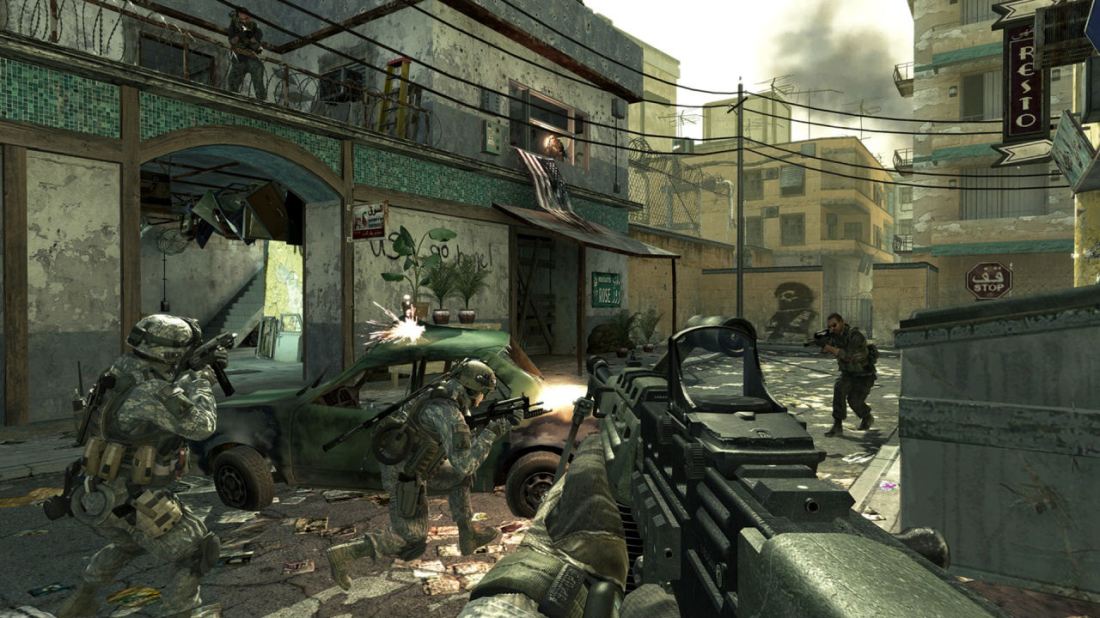
I believe there is more merit to this theory than we’d like to admit. I was first introduced to catharsis during my Zombie Politics class. Catharsis theory claims that by shooting people in a virtual space the participant is able to let out their anger in a safer, socially acceptable way.
Like many males, I love a good FPS, especially after a long day at work. I look forward to jumping into a casual lobby of CS:GO or Overwatch. Even better, is when I share this experience with a couple of friends.
I’m able to kill two birds with one stone in this way. Not only do I get to bond with my friends, which is vital for my happiness, but I also get to let off steam. It is especially satisfying when you do particularly well in these games. I feel a sense of satisfaction and accomplishment which is sometimes missing from my professional career.
Although the accomplishment is different from catharsis, it is not unrelated. I feel more accomplished because I’m better able to destroy my enemies and regain a sense of control I sometimes lack otherwise.
In the next installment of this series, I’d love to explore psychological research done into the relationship between video games, catharsis, and participant health.
Displacement & Escapism

I believe this is where video games have the most potential for harm, but if leveraged properly can be beneficial for everyone. Video games can be deeply engrossing, especially for those who lack better real-world alternatives or are highly imaginative.
I’m sure many of you can recall at least one story of someone who became so lost in WoW that they didn’t emerge from their room for days. Although not to this extent, I use to go on almost day-long benders with games that caught my interest.
Part of the reason for this is people believe that they are their character. They become so engrossed in this much more bad-ass version of themselves that they don’t want to return to being their real-life self.
Clearly, when done to excess, this is harmful and damaging; but, could a microdose of this be helpful? To create this bad-ass version of themselves, they must identify some traits that they want. Further, they must have an active part in shaping their online persona’s ability.
Because of this clear causal link (the player does certain actions, this leads to a better character), I wonder if it would be possible to utilize certain games in combination with CBT to help people with low self-esteem.
In the next installment of this series, I want to further distill the research between gaming, CBT, persona, and self-esteem.
Gradual Exposure through VR
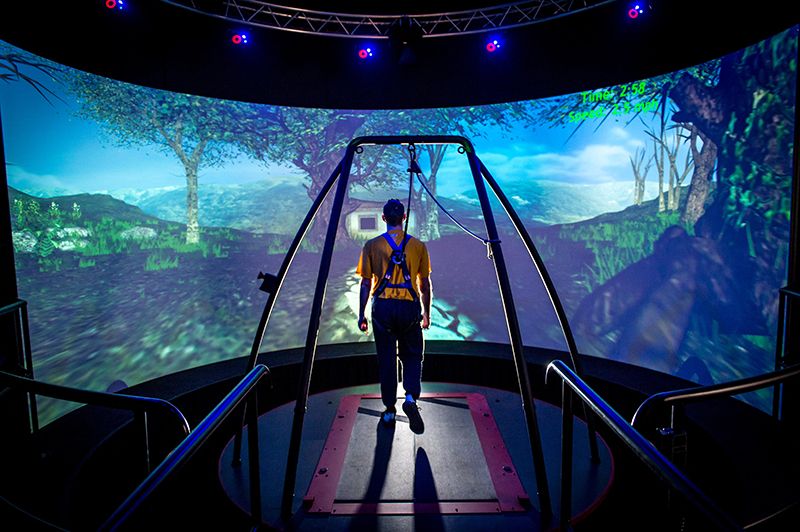
Although the first two ideas I proposed are fun thought experiments worth further inquiry, I believe this is where video games change the future. We are already seeing VR be applied in specific physical and mental therapies. As pictured above, it can help people stay motivated with a long, arduous physical recovery.
Aside from physical recoveries, I also believe it can help heal emotional trauma. There are promising studies suggesting VR is a safer way to perform an already accepted practice of gradual exposure therapy. Specifically, in veterans, VR has seen amazing initial results.
I believe that we have just scratched the surface of possibilities with VR. As VR becomes more difficult to distinguish from reality, VR could be used to condition people to a variety of situations as well. This could range from helping people with social anxiety master the basics of socializing to teaching people on the Autism Spectrum how to better deal with external stimuli.
Although the tech is still fairly young, it holds great promise and could prove to be a wonderful complement to traditional therapies, just like music and art. Thus, for this last avenue of discovery, I want to explore the development of music and art therapy to see where video game therapy may be in comparison to these established methods.
Wrapping up Part 1
Video games are often blamed for many world ills. Although I don’t believe this blame is entirely unearned, I think a better approach would be to treat it like other forms of art. It has great power and peril because it taps into more of our senses than most other mediums.
In my view, this is the strength of games in a therapeutic sense. If properly researched and vetted, I believe virtual environments can weave together several proven forms of therapy for a more powerful effect.
Video games could also serve as a form of self-therapy. When proper precautions are taken to ensure they aren’t abused, video games serve as a great form of stress relief and even social bonding. Given more research, it may be possible to find the optimal genres for invoking certain mental states, just like we can currently do with music.

 Apprentice Adult